Pages

Wednesday, May 25, 2011

Right Livelihood and 7 Charateristics of Frugal Innovators

I recently stumbled across a 1994 essay on Mindfulness and Meaningful Work that characterized people engaged in, what Buddhists refer to as, right livelihood. Coincidentally many of the items the author1 listed also apply to the many innovators I've met or have read about.
  • Persistent: Innovators have to be able to overcome the inevitable obstacles that occur in the early stages of any breakthrough project.
  • Realistic: Or as the author puts it, the ability to "face the facts". While persistence and perseverance are important, recognizing and accepting that something isn't likely to work out is just as critical. Deciding whether to move forward or change direction, often requires a certain amount of maturity and experience.
  • Overall strategy is to "minimize risks": Innovators who understand the existing product landscape, are more likely to come up with solutions that meet the needs of customers. In the case of frugal innovation, many of the famous examples are products explicitly designed to meet the needs of working class consumers in the developing world. This doesn't mean that one should avoid working on bold ideas. But becoming a successful entrepreneur does require contingency planning.
  • Active participant (preference for hands-on learning): Knowing the details of particular tasks and how they fit into a larger framework, are needed in order to design products, services, and solutions that meet the needs of customers. In the context of market research, I'm reminded of what ethnographers refer to as "deep hanging out".
  • Self-starter: There is no substitute for working on things that interest and engage you. But at some point executing on your ideas means  routine and not-so-inspiring tasks need to be done. Paying attention to routine aspects of a project sometimes leads to insights about further improvements that your final product can provide. (Building on the Buddhist perspective that I'm borrowing from, it's worth noting that those steeped in mindfulness practice, swear that mindfulness helps them experience "flow" even when they're faced with seemingly mundane tasks.)
  • Community member: It's much easier to innovate when one has a support structure in place. Start with friends and family, but expand to a network of (online) friends with similar interests and passions. Reciprocity is important in healthy relationships: you have to  nurture and support those that do the same for you.
  • Knows how to manage time and money: Time and money are essential to any new venture. Learning how to manage time and money frees you to pursue your ideas. Without adequate resources, you frequently have to postpone working on your pet projects. Similarly if you mismanage your time (e.g., by overextending yourself), your resources may prove inadequate to fund your projects.

Monday, May 16, 2011

Unbanked by the Numbers

Below are three charts and tables from the recent issue of the Economist. The first provides estimates for the number of unbanked in several high-population countries. As financial services companies in these countries continue to innovate to reach the large number of unbaked citizens, look for some of those innovations to start influencing banking in the developed world.

(Click to enlarge)

The next two charts (taken from here & here respectively) assume that fertility rates stay more or less at current levels. The shocker in the first chart is the Philippines: currently at 96 million and projected to reach 178 million by the end of the century. That estimate will probably fall short, given that the country is poised to pass landmark legislation that should curb population growth.

(Click to enlarge)


(Click to enlarge)

Friday, October 1, 2010

Vijay Govindarajan on (frugal) innovation

Darthmouth Business School Professor, Vijay Govindarajan, on innovation and the "rivalry" between India and China:


Monday, August 2, 2010

M-PESA in a nutshell

Concise and nicely produced video primer from the folks over at CGAP:


Moobile banking's combination of reach and low costs is changing financial services in the developing world. I just hope financial services companies in industrialized countries are paying attention.

Friday, July 23, 2010

A tale of two Vehicles: the Jaguar and the Jugaad

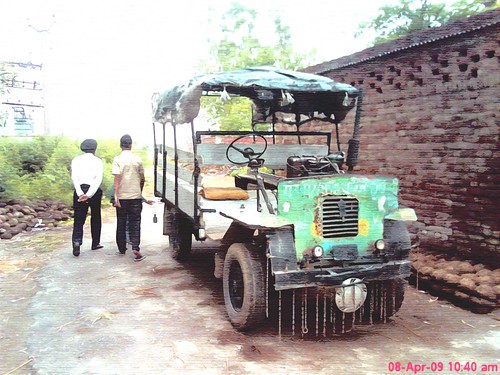
This recent NYTimes op-ed highlights the ingenious Jugaad, a familiar sight in rural India:

(Click to enlarge)
... Then there is the jugaad (pronounced jew-gaar), which is nothing like a Jaguar.

It is, for one thing, illegal: a truck tossed together, saladlike, in the sheds of northern India, beyond regulators’ view. Parts from old jeeps are cut and welded and combined with wooden planks to form a chassis. An engine commonly used for irrigation pumps is attached.
Actual bells and whistles may be added as adornments, and the wheels are painted by hand.

The truck gives India’s village dwellers a cheap ride: 10 cents for a half-hour journey with a few dozen others. So compelling is their business logic that jugaads have become popular in dowries.

The truck may be obscure, but the culture behind it is now a management fad. Jugaad, not as noun but as verb, is suddenly the talk of consulting firms like McKinsey and companies like Best Buy in the United States.

The slang Hindi verb “jugaad,” as translated for managers, means to make something much like a jugaad. It is to be innovative despite scarcity — a winning formula for hard economic times.
Management gurus cite India’s ultra-low-cost creations as inspiration: the $800 electrocardiogram, the $24 water filter, the $2,500 car, the $100 electricity inverter, the $12 solar lamp.

But these represent only a sliver of what jugaad is. It is more than frugal innovation; jugaad is a way of life, here as elsewhere, that has anticipated important movements of the 21st century, from open-source technology to cultural fusion. From years of observation in India, some core tenets emerge, many of use beyond the business world.

FATALISTIC CREATIVITY: India is not an easy place, and to be fatalistically creative is to transcend its hardships. It is to chafe daily against the way things run; to resist the idealistic temptation to change all that; and to strive instead for success and solutions within the constraints.

... MARKET HUMANISM: Jugaad, as a truck and a way of life, involves a capitalism different from the market philosophy that informs the West — and one that prefigured the interesting new directions that capitalism is taking today.

... ANYONE SOURCING: The black-and-yellow Mumbai taxi, an exemplar of jugaad, was crowd-sourced before Wikipedia and open source before Firefox.

... BOTH-AND TRUTHS: A.K. Ramanujan, the late Indian folklorist, once asked whether there was a specially Indian way of thinking. His conclusion was that Westerners were more comfortable with truths applied universally to every case, while Indians resisted the universal, preferring situation-specific solutions. This is philosophical jugaad: an approach to human dilemmas that rejects the either-or.

Thursday, July 15, 2010

mKRISHI: A multi-lingual platform for farmers

This innovative mobile platform lets farmers send data and images to experts and policy makers. In addition to benefiting individual farmers, the crowdsourced and technology-driven data collection has the potential to catch and quickly resolve problems that plague India's large agriculture sector:
mKRISHI is developed by Tata Consultancy Services Ltd (TCS) as an innovative platform to offer personalized and integrated services to farmers. TCS mKRISHI platform combines multiple technologies to bring vital information regarding local weather, fertilizer requirements based on soil conditions, pest control, and current food grain prices in local markets in a rich content format to the farmer’s low-end mobile handsets. It allows farmers to send queries in their local languages, as well as images and voice activated SMS through a mobile phone and provides personal responses with advice or relevant information in these languages.

... Some of the key benefits to farmers are:

* Advice on pesticides/fertilizers, such as how much and when to spray
* Advice on when to harvest in relation to weather to limit crop damage
* Combining yields allows efficient collection of goods
* Market prices made available so they can choose where and when to sell
* Current pricing information for NCDEX, future prices and global rates
* Bankers can use the mKRISHI programme – enabling more rapid loan payments to farmers
* Useful information such as rural Yellow pages, as well as bus times and railway reservations could improve farmers’ activities.

Wednesday, July 14, 2010

Solar powered ATM's

A series of energy efficient ATM's that rely on biometric authentication, Vortex Gramateller ATM's are currently deployed in just under 100 locations in rural India. The ATM's can accept and dispense soiled (or "teller-grade") notes, a must-have feature in rural India: